 moneytar.com
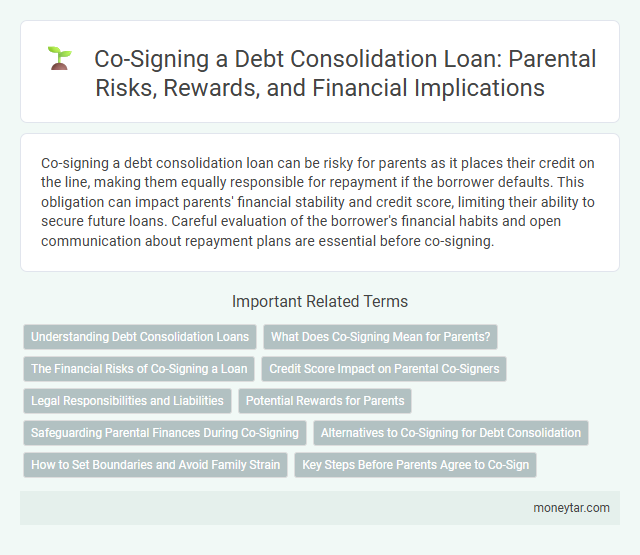 Is co-signing a debt consolidation loan a smart choice for parents? Infographic
Is co-signing a debt consolidation loan a smart choice for parents?
Co-signing a debt consolidation loan can be risky for parents as it places their credit on the line, making them equally responsible for repayment if the borrower defaults. This obligation can impact parents' financial stability and credit score, limiting their ability to secure future loans. Careful evaluation of the borrower's financial habits and open communication about repayment plans are essential before co-signing.
Understanding Debt Consolidation Loans
Debt consolidation loans combine multiple debts into a single payment, often with a lower interest rate. This simplification can help manage finances more effectively and reduce monthly payments.
Co-signing a debt consolidation loan means taking legal responsibility if the primary borrower defaults. Understanding the risks involved is crucial before committing to such financial agreements.
What Does Co-Signing Mean for Parents?
| What Does Co-Signing Mean for Parents? |
|---|
| Co-signing a debt consolidation loan means parents agree to take legal responsibility for the loan if the primary borrower fails to make payments. This action can impact parents' credit scores directly and may increase their debt-to-income ratio, affecting their ability to secure future credit. |
| When parents co-sign, they become equally liable for the entire loan amount, regardless of who makes the payments. Missed or late payments by the borrower can damage the co-signer's credit history, making financial recovery more difficult. |
| Co-signing can provide access to better loan terms, such as lower interest rates or higher loan amounts, by leveraging the co-signer's established creditworthiness. However, the financial risk involved requires careful consideration of potential consequences before committing to the agreement. |
| Your decision to co-sign should factor in your financial stability and willingness to assume repayment responsibilities, as co-signing a debt consolidation loan carries significant legal and financial obligations. |
The Financial Risks of Co-Signing a Loan
Co-signing a debt consolidation loan exposes parents to significant financial risks, including full responsibility for the debt if the primary borrower defaults. Lenders hold co-signers accountable for timely payments, potentially damaging credit scores and causing financial strain. Careful consideration is essential before agreeing, as the co-signer's savings and creditworthiness are directly impacted.
Credit Score Impact on Parental Co-Signers
Co-signing a debt consolidation loan can significantly impact a parent's credit score, as the loan appears on their credit report. Any missed payments or defaults by the primary borrower will directly affect the co-signer's credit rating.
A strong credit score is crucial for securing future loans, credit cards, and favorable interest rates. Parents who co-sign take on full responsibility for the debt, which increases their financial risk. Carefully evaluating the borrower's ability to repay is essential to protect the co-signer's credit health.
Legal Responsibilities and Liabilities
Is co-signing a debt consolidation loan a smart choice for parents? Co-signing legally binds parents to the full repayment of the loan if the primary borrower defaults. This responsibility can impact credit scores and lead to potential legal actions against the co-signer.
Potential Rewards for Parents
Co-signing a debt consolidation loan can offer parents financial and relational benefits when helping their children manage debt. Careful consideration of the potential rewards may lead to strengthened credit profiles and improved family support dynamics.
- Credit Building Opportunity - Parents can help improve their child's credit score by ensuring timely payments on the consolidation loan.
- Lower Interest Rates - Co-signing may enable access to better loan terms, reducing overall interest expenses for the family.
- Strengthened Family Trust - Offering a co-signed loan demonstrates support and fosters honest financial communication between parents and children.
Safeguarding Parental Finances During Co-Signing
Co-signing a debt consolidation loan can significantly impact parental finances if the primary borrower defaults, as parents become legally responsible for the entire debt. It is crucial to assess the borrower's financial discipline and repayment capability before agreeing to co-sign. Establishing clear communication and monitoring loan payments regularly helps safeguard parental credit and financial stability.
Alternatives to Co-Signing for Debt Consolidation
Co-signing a debt consolidation loan can pose significant financial risks for parents, potentially affecting their credit score and leading to liability if payments are missed. Exploring alternatives allows you to address debt without jeopardizing personal financial stability.
Options such as seeking a secured loan, applying for a personal loan independently, or utilizing credit counseling services provide viable paths to consolidation. These methods help manage debt responsibly while maintaining your financial autonomy and protecting family relationships.
How to Set Boundaries and Avoid Family Strain
Co-signing a debt consolidation loan can create financial risks and emotional stress for parents. Setting clear boundaries is essential to maintaining trust and avoiding family strain.
- Establish Clear Expectations - Define the responsibilities and repayment plan before signing to prevent misunderstandings.
- Communicate Regularly - Maintain open communication about loan status to manage potential problems early.
- Set Financial Limits - Agree on a maximum amount to co-sign to protect your financial stability.
Setting boundaries helps protect relationships and ensures that co-signing supports both parties' financial health.
Key Steps Before Parents Agree to Co-Sign
Co-signing a debt consolidation loan involves significant financial risk and responsibility. Parents should carefully evaluate the implications before agreeing to become co-signers.
- Assess the Borrower's Creditworthiness - Review credit reports and financial history to gauge the likelihood of timely repayments.
- Understand the Loan Terms - Examine interest rates, repayment schedules, and potential penalties to fully comprehend the obligation.
- Evaluate Personal Financial Impact - Consider how co-signing might affect credit score, borrowing power, and overall financial stability.
Related Important Terms
Co-signer liability risk
Co-signing a debt consolidation loan exposes parents to full liability for the loan, meaning they are legally responsible for repayment if the primary borrower defaults, which can significantly impact their credit score and financial stability. This heightened risk requires careful consideration of the borrower's reliability and the parents' capacity to cover the debt to avoid potential financial hardship.
Parental credit implication
Co-signing a debt consolidation loan can significantly impact parents' credit scores, as missed or late payments on the loan will appear on their credit reports, potentially lowering their creditworthiness. This shared responsibility may also increase parents' debt-to-income ratio, limiting their ability to obtain future credit or favorable loan terms.
Debt consolidation parent trap
Co-signing a debt consolidation loan exposes parents to significant financial risk if the borrower defaults, potentially damaging their credit and leading to unexpected debt obligations. This "parent trap" can undermine financial stability, making it crucial to evaluate alternatives before committing to co-signing.
Family financial entanglement
Co-signing a debt consolidation loan significantly increases family financial entanglement by legally binding parents to their child's debt, potentially affecting credit scores and access to future credit. This interconnected liability often complicates financial planning and can strain family relationships if repayment difficulties arise.
Multi-generational debt strategy
Co-signing a debt consolidation loan can be a strategic multi-generational debt approach, providing parents an opportunity to help adult children improve credit scores and manage liabilities efficiently. However, parents must weigh the risk of being legally responsible for repayments, which can impact their own financial stability and credit health.
Credit score shadowing
Co-signing a debt consolidation loan can significantly impact parents' credit scores through credit score shadowing, where the loan's performance directly affects both parties' credit histories. Negative payment behavior or missed deadlines on the loan can lower parents' credit scores, increasing financial risk despite potentially helping their child consolidate debt.
Intergenerational loan backing
Co-signing a debt consolidation loan allows parents to leverage their credit history to secure lower interest rates, reducing the financial burden on younger family members while fostering responsible credit behavior across generations. However, this intergenerational loan backing carries risks such as potential damage to the parent's credit score and legal liability if the primary borrower defaults.
Nested debt responsibility
Co-signing a debt consolidation loan transfers nested debt responsibility to parents, putting their credit and financial stability at risk if the primary borrower defaults. Parents should evaluate their ability to manage potential repayment obligations impacted by fluctuating interest rates and loan terms before committing.
Parental FICO exposure
Co-signing a debt consolidation loan exposes parents to significant FICO score risks because missed or late payments on the loan directly impact their credit history, potentially lowering their creditworthiness. This shared responsibility requires careful consideration since any default not only affects the child's credit but can also damage the parent's financial standing and borrowing capacity.
Exit clause for co-signers
Parents co-signing debt consolidation loans should carefully review the exit clause to understand when and how they can be released from financial responsibility. A clear and favorable exit clause minimizes long-term risk by allowing co-signers to remove their obligation once the primary borrower meets specific repayment criteria.